Wednesday, 29 April 2020

Ramadan Reflections 2020: 30 Days of Gratitude

Bismillah.

It appears that all my recent posts are about Ramadan. I should have a whole separate section for them. Therefore, I decided to record whatever I learn on a daily basis for my own benefit first and maybe to inspire other mothers/women.  :)

It is the first day of Ramadan 2020. While Sehri was rushed, thanks to a wailing toddler mid-sehri prep, I managed to stay up for a considerable amount of time after Fajr prayers and realised how many benefits one reaps as an outcome. I am listing down some things you can do in this time, below: 

1. Fast from your mobile at least during the first hours of the day. 

2. Take a chair outdoors and pray Ishraq, read Quran and tafseer there. 

3. Look up at the sky and you will realise we barely do that any more - our necks craned over our tiny screens all day.


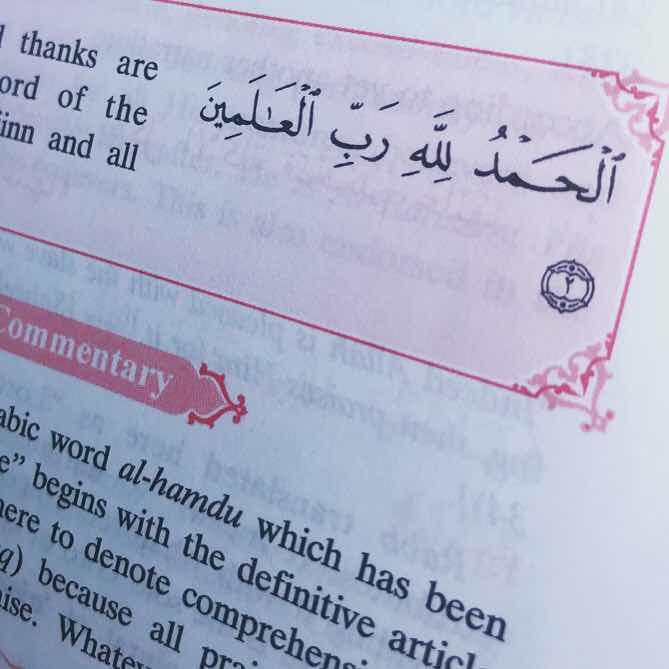
I did all of these this morning, الحمد لله and despite being drowsy I felt considerably better. I shall call this my “Me-time” with Allah (SWT). Additionally, on the topic of الحمدلله, I was reading through the Tafseer of Surah Al Fatiha, where it was defined as all praise belonging to Allah Alone. When we mention His beautiful creation, we should always attribute it to The Creator and praise Him and be grateful to Him. Hence, my theme of “30 days of Gratitude”. 

May Allah (SWT) help me in maintaining this healthy routine throughout this month and beyond. Ameen. 

Have a blessed Ramadan, everyone! 

Wednesday, 22 April 2020

Blessed Guest

Picture Courtesy my son, Muhammad Salahuddin. 


Butterflies in my stomach,
A twinkle to my eye
A special guest is coming
It’s time to rejoice

He bears the Quran
Filling our hearts with light
Days devoid of food
And peaceful prayers at night 

Welcome, Oh blessed guest 
With joy we invite thee
Oh bearer of blessed nights
In which was sent the decree

With a prayer in our hearts
That we see you after Shaban
We welcome you again
Ahlan wa sahlan, ya Ramadan! 


Tuesday, 4 June 2019

A Mother's Ramadan


I got my backpack ready, making sure I’ve packed something for the kids to eat, oh and not to forget their little plastic glass to drink water! With a few minutes to go, I find out one of them has pooped in their diaper, hence, ensues the mad rush of a diaper change before we pack ourselves in the car. No, we are not going on a journey. We are going to the Masjid for Taraweeh prayers in Ramadan!

Mid-prayer, I run after my 1 year old who is for the 100th time putting something fishy in her mouth. I hold her in my arms while I pray and she constantly tries to wriggle out of my grasp. It’s like wrestling with a shark! Meanwhile my 3 year old tries to take off my glasses and pulls his sister’s legs, wanting to be in my arms as well. Tears stream down my face as I try to concentrate on the Words of Allah. Praying for help, for ease, while the words 

إياك  نعبد و إياك نستعين 

ring in my ears. After all, who else can help me but Him? 

I get everything ready for Suhoor and am about to take it to my husband when I notice we only have 15 minutes to go till the Adhaan. My one year old suddenly decides to join in as she wakes up wailing at the top of her voice waking her brother up in the process. As I hold the little one in my arms, her brother wants water from his father. We somehow manage to east enough till the Adhaan sounds. 

Before Ramadan started, I was so excited as it was the first Ramadan that finally I would be able to fast. I salivated over all the #RamadanBasket posts on Instagram and mentally made a list of all the things I wanted to do this month. Reality, however, had different plans. So different that a blog post written mid-Ramadan is finally being completed once it is almost Eid. 

What kept me going through this month, you ask? Tawakkul (Trust) in Allah and His plans. The consolation that came through His words during Taraweeh in those blessed moments when I could concentrate enough. And a thought struck me which made me spend the rest of my Ramadan with a lot more gratitude. 

When you feel overwhelmed by the responsibilities that prevent you from giving your full due to your ibadah, just think of the time when you prayed frantically for the very things that seem like a burden to you now. I thought of my prayers of four years ago, so much more khushoo and so much more concentration yet what did I pray for? A pious spouse and righteous children. Four years later Allah gave me the blessed opportunity to not only witness Ramadan again but to be able to pray in the Masjid despite the challenges. He gave me a righteous spouse and two beautiful children who I now need to focus on raising as His righteous slaves. 

THIS IS MY IBADAH. And may He accept it with the fasting and the prayers and the little Quran I managed to read with a heavy heart. On this 29th night I pray for ease for all the mothers, and for all those who are praying to become mothers. 

May you all have a blessed few hours that are left of Ramadan, and a wonderful Eid! 

Ramadan with a Toddler in the 21st Century


Bismillah.

This disjointed, random, out-of-the-blue post is typical of my life these days. A phase of life where there are days when I barely have time to go to the bathroom, and days when I find myself listlessly wondering what I should do with my time when my toddler sleeps early.

Being a mother in the social media era has its own challenges. The more the blogs, groups and forums on motherhood, the greater the chaos and the lesser organised are our lives, juggling between screens, wailing children and household chores. And between it all the struggle to make that oh-so-important status update on Facebook/Twitter/Instagram just to make sure the world knows how chaotic organised our lives are.

As if the struggles of motherhood on their own were not enough, add to it the constant battles against society to practice Islam yourself and inculcate its values in your children. Yet, amidst the chaos, that is the very factor that adds an element of much-needed peace in our lives, Alhamdulillah. After all,

Those who have believed and whose hearts are assured by the remembrance of Allah . Unquestionably, by the remembrance of Allah hearts are assured. (13:28, Quran)

That is why, no matter how skeptical I was regarding how I would manage attending Daura-e-Quran and Taraweeh and manage Sehri and Iftar, it's as if Allah's special help made things possible and things just seemed to happen of their own accord, Alhamdulillah. My eyes filled with tears during Taraweeh as I recalled how my 14 month old cried on the first day but gradually adjusted to the new environment and made it easier for me to pray Salah in the masjid. Even though I had hard days when my back would hurt due to running after him and picking him up again and again during Salah, but my heart was still full of gratitude for just the opportunity of doing more than I ever thought was possible.

Therefore, I'm writing this for all the mothers struggling and feeling guilty that you cannot do enough worship during Ramadan. Do not lose heart! Yes, you are already doing the most important job that you were created for - raising righteous children. Even so, keep trying and you never know how Allah (SWT) makes a way for you to do more acts of worship. The quality of worship may not be the best, but we can be grateful for even the opportunity to do anything that we can, despite all the challenges that we face, Insha Allah!

Edit: Came across this blog post in my drafts from Ramadan 2 years ago, when I was about to post a new one on the same subject. SubhanAllah, that's motherhood for you right there! Thought I'd post this one as well. 

Friday, 4 July 2014

The Healer of Hearts

Bismillah.

For a long time now, I have searched for inspiration to write. What better inspiration than the Book of Allah (SWT) and the most blessed of months, Ramadan!

Every single one of us have reached a point in our lives when our heart suffered the deepest blow. The death of a loved one, a broken relationship, a scandal that ruined one's life, failure of the acutest kind, and the list goes on. You reach a point where you feel like no one can understand your pain and it feels like it will never go away. A void in your heart that nothing can fill.

We go left, right and center, searching for shrinks, self-help books, or we wallow in despair and drown in drinks and drugs. Yet, nothing seems to fill that gaping void in your heart.

Why is that so?

Because we are searching in all the wrong places! Our Creator, the One who knows our every single thought before we even express it, says in His Book, the Qur'an:

"O mankind, there has come to you instruction from your Lord and healing for what is in the breasts and guidance and mercy for the believers." (Qur'an, 10:57)


This Book that we take off from our shelves when someone is sick, dying or to hold it above the bride's head during her Rukhsati - don't leave it there to gather dust while you knock your head against people and other things to heal your heart. When you are breaking down and when the whole world seems to be falling apart, pick it up and read.

By reading I don't mean reading out the Arabic without having a clue what the words say. I mean, try to understand what your Lord is saying to you. There is a reason why the Quran was revealed as a Spoken Word (Kalaam) and not in written form. It is the only Book where you feel like you are directly being addressed in speech. It is the only Book which, like a mirror, makes you feel like every word is about you.

Sink in the power of His Words and let them heal you. Because, Wallahi, there is nothing else in this world that can do the same. Take it from me, I have tried!

If you still feel like you don't have a friend in the world who can protect you from its ugliness, read on in the same Surah, Allah (SWT) assures you:

Unquestionably, [for] the allies of Allah there will be no fear concerning them, nor will they grieve. (Qur'an 10:62)

This article was also published on the Youth Club Blog.

Sunday, 21 April 2013

Ramblings of a Closet Feminist

Bismillah.

When your mind is going in a million directions at once, the best way to pull them together would be to write a blog post. Somehow, when I began with Allah's name, it gave this post a purpose. This post is no longer as futile as it appeared before I started writing.


All of us reach a certain point in our lives when directly, or indirectly, pressure is exerted on you to "settle down". While I have nothing against the institute of marriage, for indeed, it is a Sunnah and one that helps in increasing one's Imaan and character building, I do however have some scores to settle with our twisted society regarding what it has become. Some may think that I'm confused between being a closet feminist and a "fundo" (pet word for fundamentalists or extremists, if you please). However, when you start your post wondering what people would think, you know something is wrong, somewhere. This goes on to show exactly what our society has reduced women to being.


When your purpose in life is reduced to just one thing - marriage - that's all your life starts revolving around. It doesn't matter how many books you have read, or how much you learn from life in general, at some point the main concern of our lives as Pakistani women seems to be acceptance. How many times have you come across statements like, "if you become too career-oriented, no one will marry you", "Dress modestly, men don't like women who are too bold in their dressing"and "Don't be such a dowd, educated men prefer smartly dressed women."

As I write this, the marquee next door vibrates with Bollywood beats accompanied by sounds of cheers - obvious signs of a wedding. It makes one wonder whether it is really worthwhile to spend one's life savings on a circus show without giving deeper thought to the actual union between the two people? Is the marriage just an outcome of society's expectations from a conventionally brought up woman who is so heady with the excitement of the wedding that she prefers not to think about what follows, or is it the   union between two souls that share the same purpose in life and see marriage as a source of support as opposed to the only source of happiness? Don't take me wrong, I've seen some examples of the latter as well, but they are as rare as unconventionally brought up women.

While we're on the subject of our purpose in life, how is an intelligent woman, who is capable of doing so much greater good not only for this world, but for her Hereafter as well, supposed to achieve just that if all she is spending her energies doing is fitting into a mould that she does not belong to? While she is so busy conforming to society's expected version of an ideal candidate for marriage, how will she grow herself in knowledge and benefit others from it?

As I hear heart-breaking tales of women being rejected on issues as trivial as the length of their nose, it makes one realise how much thought needs to be put into bringing back the essence of this beautiful institution. The fact that this thought was nagging me so much that I was compelled to write a blog post on it instead of worrying my head with more pressing concerns like who Pakistan's next Prime Minister would be, reflects directly on where our society is lacking.


Sunday, 22 January 2012

Across the Lai

Inspired by Charles Dickens' "The Streets - Morning" from Sketches by Boz.


The surroundings resonate with the beautiful rendition of the Islamic call to prayer for the first prayer of the day. The single voice calling "Allahu Akbar" (Allah is Great) is soon joined by a multitude of other voices, some old and some young, until the words are barely discernible. In the semi-darkness of pre-dawn, the Nala Lai looks like a smaller version of River Thames (as my brother likes to put it), reflecting tiny lights from the surrounding houses which seem to be poised precariously close to the edge despite several warnings after floods in the past to move them back. As the sky begins to lighten very gradually in the cold December morning, dark shapes, which a wild imagination turns into beings from another land, start presenting their true forms as mundane unimaginative products of modern technology.

As I start taking photos of the sunrise, the bright orange on the horizon that stays its beautiful self in every part of the world, I'm struck, as always, by the contrast in my surroundings. As I look down from the front side of my house, other than the guard heating himself infront of the flames of his personal little bonfire and an occasional wandering stray cat or dog, the well-kept neighbourhood of retired army officers is engulfed in slumber and serenity. This side of my house hardly ever held my attention for long. The backside of my house, however, where the Nala Lai stretches out in all its filthy granduer (the piles of garbage accumulated along its banks are now visible in the morning light), the world across it has always interested me.


The stark contrast that both sides of the Lai present is fascinating if not sobering. The garbage that decorates the bank of the "other" side gradually transforms into a confusion of houses of various sizes, which seem to be interconnected - no sign of any open space let alone a garden. Some housing poor families moved here from nearby cities earning their livelihoods by working at the well-to-do houses across the Nala. It is, however, also the perfect hideout for our friendly neighbourhood thieves. Won't we know it, having been victims to one such gang!


As I take pictures of the cement bridge that stretches over one end of the Lai, an occasional car or two drives across. The bridge always reminds me of the bomb blast which was attempted to kill our former President Musharraf, who would frequent the famous bridge while going back and forth from the Army House in the heart of Rawalpindi. As I move my camera lens back to the houses across, I see a tiny speck with a large sack rummaging in the junk - a scavenger in search of recyclable material, most likely. (Unfortunately, the photo was too blurred to be shared.) I now hear cars starting up, as people start leaving for schools, colleges and workplaces.

As I pack up my camera and head downstairs upon completing my mission of capturing pictures of the sunrise, I continue to think about the two contrasting worlds on both sides of the Nala - sadly symbolic of the large economic divide between the rich and the poor in my country.


Tuesday, 17 January 2012

Re-learning Islam

... Bismillah ir-Rahman ir-Raheem (In the name of Allah, the Most Gracious, the Most Merciful). When he read the words ar-Rehman ar-Raheem, he was alarmed and threw the page down, then he regained control of himself, picked it up again, and saw the words:

"Ta-Ha. We have not sent down the Qur'an unto you (O' Muhammad) to cause you distress, but only as a Reminder to those who fear (Allah). A Revelation from Him (Allah) who has created the earth and high heavens." (Qur'an 20: 1-4)

As born Muslims we tend to take our faith for granted. Just because we had the privilege of being born to Muslim families, we think we automatically received a ticket to Heaven, hence, no more effort is required from our side. Therefore, gradually, religion becomes confined to the mosque and the Holy Qur'an becomes a symbol of reverence only to be kept on the top shelf. We grow out of the curiosity regarding life that we had as children. We become more concerned about which way the hijab needs to be worn or how long the beard needs to be instead of looking at the state of our hearts and determining whether we have conviction in our belief and love for Allah (The Exalted) and His Messenger (Peace and Blessings of Allah be upon him). (Not saying that the matters mentioned formerly are to be ignored, just drawing a comparison as regards to priorities.) Isn't that why, when talking to non-Muslims regarding Islam, we become defensive instead of making an influence? Because we inherited Islam instead of choosing it as a way of life, we often overlook the all-important step of understanding the basic concept of Tauheed (Oneness of Allah) - of truly connecting with the Creator with our hearts.

I only recently realised how much this conviction was lacking in my own heart. I had seen many videos and read several articles of Muslim converts who are prominent speakers on Islam today and they always had an impact on me. Yet, it is true when people say, nothing can compare to the real thing! I've lately been going through an extensive process of soul-searching, having resigned from my job and being unemployed for a good five or so months gave me ample time to reflect on what I'm doing with my life. It was as if Allah answered my silent prayers when I heard that Brothers Hamza Andreas Tzortzis and Adnan Rashid were visiting Pakistan as part of the Winds of Change tour and deep down I knew I HAD to go!

I was prepared to be deeply inspired but the profound effect that Hamza Tzortzis' and Adnan Rashid's talks had on me on the first day of the SIST 2012, held in Islamabad, still took me by surprise. It was as if, one by one, all the questions that had been tormenting me of late were being answered. How can I contribute to bring about a change in Pakistan? Why is Pakistan perpetually plagued by one trial after another? There has to be more to my life than what I'm currently doing. Attending the Da'wah Workshop, conducted by Br. Hamza Tzortzis a day after the event, seemed to further strengthen the process of change and realisation that had already begun. Giving a little background, Hamza Andreas Tzortzis is a Greek Muslim convert "who looks Pakistani" and is a senior researcher and lecturer for iERA, UK. He has engaged in several debates with prominent academics and intellectuals.

During the Da'wah Workshop, I realised why I always reached a point of frustration when attempting to answer questions regarding Islam that were constantly bombarded my way, mainly because I wear hijab. I realised that I don't need to be defensive about my faith, I only need to make people understand the beauty of the heart connecting with its Creator and recognising Him. It's as simple as that! Everything else follows naturally, belief in the Last Messenger of Allah, Prophet Muhammad (PBUH) and all that was revealed to him, obedience to Allah, belief in the Hereafter, etc. All it takes is firm conviction in our hearts - belief, love, trust and also fear of the Creator. If we lack that, then there is no way that we can convince anyone else!

As I was mentally assessing and soaking in all that I came across and learnt during the Winds of Change tour, I started reading a fantastic book on the life of Umar ibn Al-Khattab (May Allah be pleased with him) by Dr. Ali Muhammad as-Sallabi, given to me by my grandfather some time back. Had I read it at some other time, it might not have affected me as it does now. Especially the passages regarding Umar’s conversion to Islam, the verses that brought about the change in him and the basic concepts of Islam that Umar learnt with the help of Prophet Muhammad (PBUH) had a profound effect on me. I find the strength of Umar’s belief, his open display of faith at a time when it was dangerous to do so, his eagerness to learn at the hands of the Prophet (PBUH) and his insights on many verses of the Qur’an immensely inspiring!

These are the people who know what it feels like to be on the other side. To question, reflect, and then finally accept, instead of having Islam served to them in a plate. It is about time we, the born Muslims, re-learn Islam from them and renew our faith in order to effectively give the message to others as well. We cannot convince others unless we convince ourselves first. I will end my thoughts with Brother Hamza Tzortzis’ words that caused a stir in the audience at the SIST 2012;


“Don’t be like the feather blown about by the wind. We are the wind – the Winds of Change!”


Saturday, 8 October 2011

Behind every successful event is an unlikely team!

Watching the Kaghan Valley illuminated by the most beautiful full-moon at 3 am, huddled in front of a little stove in a tent while a hailstorm tries to rip it apart, singing along to ridiculous songs while sitting in each others' laps in open jeeps riding the bumpiest roads... 


These are just a few moments from one of the most exciting, exhilarating and inspiring weeks I've ever had while organising the TCKP Tour of The Himalayas 2011 International Mountain Bike Race and Mountain Bike Tour with The Kaghan Memorial Trust (KMT) in aid of its Kaghan Memorial School (KMS) between 14 and 20 September, 2011.  When I got back and saw all the media coverage which the event attracted, mainly due to the fact that in times when even Pakistanis living abroad think twice before coming here, we had around 30 International male and female mountain bikers coming all the way to Pakistan to compete in an event for no personal gain and to benefit children from an area which they had never visited before, I realised there is still so much more to the event that external media reports cannot cover. We all know that events don't get organised overnight and usually there is a group of people toiling away in the background to make things happen, what I found particularly interesting in this case was the combination of people that comprised the Orgnanising Committee of this particular event. 

I have had the privilege of working with KMT for well over 4 years now which has given me the opportunity to spend a great deal of time with people from varying backgrounds and cultures, belonging to countries ranging from the US, UK, Canada, New Zealand, Autsralia, Bosnia, Turkey and Sweden. Other than giving me endless opportunities to act as interpreter (even though my own Urdu is hardly above standard!) and tell a wide array of people about my culture, especially from a woman's perspective, it gave me the opportunity to learn about their diverse cultures. But above all these things it drove home the fact that humanity has no race, language or creed. After a long day when we would sit together to unwind, we were all just a bunch of women going through similar problems identifying with each other's emotions. Moments like those have made my time working with these amazing women truly memorable.

The race itself, which attracted a large number of foreigners to our benighted nation, not only reinforced this concept of humanity, but also makes one realise how false reports of intolerance regarding our country are. True, we are divided into endless groups and target each other in hatred, yet when it comes to guests from abroad, even people belonging to the most backward or least exposed areas were nothing but friendly and hospitable. Watching the rapport that developed between my people and "the foreigners" over the week touched my heart. Furthermore, when we were all caught unprepared with spare warm clothing in the middle of a hailstorm atop Paya, every one rushed to give their coats to the riders to keep them warm after the race. I can't help but think, why are we otherwise so preoccupied by differences and hatred when at the end of the day it does not matter? If an unlikely team of people from differing backgrounds and cultures can come together to make one event successful, why can't we come together more often at a much larger scale and solve much bigger problems that affect us all?

Moving on from my rambling, it was also touching to see the children of the School that this event aimed to benefit so excited by the race and it's participants. They learnt about the countries that the cyclists came from and they were also the spectators on the third day of the race, counting down with the Managing Trustee as he signalled the start of the race. The people who work with the organisation and are helping us in making this project possible also happen to be foreign volunteers who have come all the way to Pakistan to support a cause which is of no personal benefit to them or their countries. Things like these make one regain some of one's faith and hope in mankind. If only our own people were also more willing to practically participate in projects that bring about social change instead of spending most of their time being cynical, things could probably turn out much better for Pakistan.

How can I overlook the overwhelming beauty of our surroundings?! Words cannot accurately describe the breathtaking beauty of the Kaghan Valley and it's changing moods. The wonderful feeling of closeness to Allah (SWT) through the beauty of His creation. Funny how we rush to travel abroad for our vacations yet many of us have yet not explored the varying beautiful landscapes of our country!

Lake Saif ul Maluk
All in all, I could never write enough on the marvellous experience I had helping organise the TCKP Tour of The Himalayas! It was a truly exhilarating experience that will live in my memories for a very long time. Not to forget, the wonderful people I had the opportunity to meet and get to know! :-)

The Kaghan Memorial Trust is a non-profit charitable Trust registered in Islamabad in the aftermath of the earthquake that struck Northern Pakistan in October 2005. One of the Trust's immediate objectives is to establish the Kaghan Memorial School which provides free high quality education, health care, meals and clothing to the earthquake affected children of the Kaghan Valley. KMT organises various fundraising events as part of its Income Generation Programme to support the School, one of which is the Tour of The Himalayas. More details on the Trust can be found on their website: www.kmt.org.pk

Saturday, 10 September 2011

A Letter to my Diary

Dear Diary,

How long it has been since I last shared my thoughts with you! Even though this is precisely how I would start every single entry, this time it has been long, indeed. Why have I thus abandoned you and moved on to other mediums of expression, oh confidante of my childhood? Just because my writings were limited to your pages alone (or the occasional nosy parker who would peep through!) does that mean I abandon my old loyal friend and move on to other fickle companions?

Things have changed a great deal since I befriended you in the 90's. The advent of the internet has changed the way we express ourselves. As we have discovered a medium that makes our writings available to the world, who would need to keep a diary and undergo the tedious process of picking up a pen and writing hoping that some day a curious passer-by will read it, publish our work and make us famous? Other than the occasional teenager who uses your time-worn pages to lament unrequited love or doodle in idle time, gone are the days when great writers and thinkers recorded journeys and events in diaries. Who needs to labour with the art of beautiful handwriting when you can write perfectly legibly using a keyboard? 

As handwriting turns into a scrawl, and words lose their essence, blogging, tweeting and commenting is increasing in momentum. Yet can our Blackberries, iPhones, iPads and laptops replace the personalised experience that writing with pen on crisp paper brings? Nothing can make up for the beauty of words gradually taking shape as the pen caresses the page etching our words to be preserved in time to be opened many years later and the experience relived. As I flip through your pages, I can still smell the scent preserved in your folds with loving care, visions jump up at me of childhood memories preserved in writing and lessons learnt are re-learnt.

Alas! Times change and so should we. Who knows when I need the privacy of your scented pages to record moments of silent frustration and soak your pages with tears of agony like I used to? After all, don't they say that a loyal friend stands the test of time? 

Your old fickle friend,

Mariam


Thursday, 11 August 2011

How will YOU celebrate this Independence Day?

As 14th of August (Pakistan's Independence Day) draws near, I see people from all walks of life in my country preparing for the "big day" in their own ways. Cars start appearing with the national flag perched on them, stalls selling flags, badges and everything green imaginable show up on road sides, profile pictures on the internet suddenly change to depict the flag or the Quaid, and of course, who can miss the rehearsels for bike stunts! It is definitely a day of great national pride for us and the feeling is shared by every Pakistani no matter which part of the world they live in. Yet amidst all this hype to celebrate can we at least stop and think what we're celebrating here?

Why is it that the moment someone starts to question anything in Pakistan, either their loyalty to this country or their faith starts getting questioned? Being Pakistani or independent is not just about flaunting the national flag and calling yourself "Pakistani and proud". We are all well aware of the circumstances that we are living in and they are definitely not getting any better with every passing day. Whatever few achievments we have had are mostly limited to the hard work of some individuals. There is hardly anything that we can be collectively proud of as a nation. Have we ever stopped to question ourselves why that is so? Is America or India or any other country really responsible for our troubles? Is it fair to pin everything on our government or the military when they actually came from amongst us? 

This is not an attempt to dampen our joy in celebrating this day, but a reminder to stop, think and question - something we have forgotten to do of late. Only by attaining self-acceptance will we truly be able to solve our problems and take out our beloved nation from the rut it is stuck in. What I also find baffling are visions of Pakistanis across the world who probably have never set foot in this country suddenly overcome by a wave of patriotism come August 14th or a Pakistan cricket match. True, Pakistanis abroad tend to feel more strongly about the country as they're away from home, but for once can we burst out of our idealistic bubbles and accept the reality we are living in? The residents of Pakistan may have their fair share of sarcastic humour and cynicism but it all stems from the circumstances we are living in and witnessing day in and day out. 

Coming back to the subject, how would putting up lights and singing national anthems on one day help this country? Is that all the Independence Day is about? Instead of flaunting our patriotism with words, why not prove it by putting the proverbial money where our mouths are? In order to celebrate the Independence Day in the true sense of the word, the least we can do is take the first step towards building a sustainable Pakistan so that the future generations would actually have something to celebrate. There are countless people struggling with very worthwhile projects based on education and sustainability. I say, let's celebrate this Independence Day by contributing our resources, monetary or otherwise, in helping these projects attain their goal towards a better Pakistan. It's the least we can do if we can't make any similar initiatives of our own. We need to especially inculcate the spirit of volunteerism in our youth which comprise such a major part of the population so that they bring their spare time to constructive use, instead of whiling it away in front of TV screens, video games or the internet. If we look at it this way, if every single educated Pakistani would take upon him/herself the responsibility to educate one disadvantaged child, imagine the difference that could make! 

So, how will you celebrate this Independence Day? 

The author is an Anti-Drug Ambassador for the Ministry of Narcotics Control. The Anti-Drug Ambassadors are a group of young people from diverse backgrounds dedicated to the cause of eradicating or reducing significantly the impact of illicit drug use amongst the youth of Pakistan.

Saturday, 6 August 2011

Viewer discretion advised

As I flipped through the channels while watching TV, I stopped at one which had a bold message across the screen.


As the show in question started, my mind drifted off to other terrains. All I need to do is switch to one of our news channels and, lo and behold! Images of violence and gore grace our screens day in and day out. Heck, you don’t even need to switch channels. If you’re living in Karachi, walk out on the street. No one will come to you with a sign that says, “Discretion advised, things are going to get messy here”, before a bout of target killing ensues at the whim of a group of lunatics who believe only a certain sect/class/race of people have the right to live. 

The impact of violence on our country can be seen by the fact that when you enter “violence” in the search bar on the internet, the fifth result on the Google page is Major incidents of terrorist violence in Pakistan, 2011”. (Missed taking a screen-shot and even though the result page is different now, Pakistan still features on the top somewhere.) There was a time when hearing of a bomb blast used to make us exclaim in horror. Now, we’re surprised if we hear of only one. Why is Pakistan thus gripped by this never-ending cycle of terrorism and violence? If you were to ask us this question, you would get varying responses depending on which school of thought that person belongs to. The “liberals” will tell you it’s due to the “extremists”. The religious “fundamentalists” will say it’s an American conspiracy to destabilize Pakistan (meaning we were actually stable at some point?). Your random Taxi driver will say it’s a Jewish conspiracy or India is behind it. You will hardly hear anyone say, “The problem lies within us. Intolerance, suspicion and hatred has been so deeply ingrained within us over the years that its inevitable outcome is the violence that has now gripped the entire country”. Why you won’t hear anyone saying that is because “self-acceptance” is a trait we lack amongst others. 

Pakistan, however, is not just all negative adjectives. If there’s any good that I see in my country, it’s potential – lots of it. In the form of our youth that constitutes a staggering 63% of the entire population. If you were to ask me the solution to the many problems in our country, I would say channelize this colossal potential in the right direction, and the best way of doing that is by education. The “education” I’m referring to is not a catch-phrase that is thrown about by NGOs or a statistic to show that we are meeting the Millennium Development Goals. It is very aptly put by John Dewey as, 


“Education is a social process; education is growth; education is not a preparation for life but is life itself.” 


If we were to consider it as Dewey puts it, our education system needs some serious revision.
  1. Knowledge imparted needs to be accompanied by examples of practice in the real world. Knowledge is incomplete without implementation. Our national education system mostly relies on the rote system and our students leave school without any clue as to how they should apply what they learnt in their lives. 
  2. As a nation we are physically extremely inactive. Some members of the elite class have started frequenting gyms on a regular basis but our middle class hardly engages in any form of physical exercise in their daily routine. Schools also don’t give importance to sports as part of the curriculum any more. Exercise and sports are a great way of venting the negative energy within us, necessary in the times we’re living in. 
  3. Religious education needs to focus more on the individual’s character building. Along with teaching the Arabic text, effort needs to be made to understand the content of the Quran and its implementation in our daily lives. Islam, in essence, is an extremely tolerant religion and the text should not be misused to make our youth think otherwise. 
  4. Wisdom passed down over centuries in the form of storytelling should not be replaced by a completely Westernized approach to education. We need to stay true to our values to retain our identity. 
  5. Give the true version of history. Everyone has the right to know.
All in all, we need to focus on nurturing well-rounded individuals and we need to also understand that this process will take time. No one, especially not the government, can wave a magic wand and change this nation for the better overnight, because unfortunately, in real life you can’t change the channel to what you want.

Sunday, 31 July 2011

Rehabilitation: Whose responsibility?

As we walked into the room, eight pairs of eyes turned to us. Sunk in sallow faces some had a flicker of hope in them while some seemed lost. Their owners sat on their respective beds, neatly arranged to fill the narrow room. There was hardly any space to stand in the white-walled, hospital-ward-looking room where the smell of human sweat permeated above all else. Yet, for some reason, all these things didn't matter because the look in their eyes spoke not only a mixture of deprivation, silent war and hope but also expressed gratitude every time they looked at our guide.


I, accompanied by twelve other Anti-Drug Ambassadors for the Ministry of Narcotics Control, visited the Model Addiction Rehabilitation and Treatment Center (MARTC), Islamabad yesterday. Other than being informative, the visit also left a deep impression on my mind. For some reason, it reminded me of the time when I went to the General Hospital in Rawalpindi to help the 2005 earthquake-affected victims that had been brought there from the Northern parts of the country. The same stifling heat, sense of loss and depressing atmosphere. The difference was that those people were there due to a natural calamity, yet these people were here due to a self-inflicted disease – that of drug addiction. Whether it was forced on them by peer pressure, or they were drawn to it to make up for whatever was missing in their lives, what upset me was that these people didn’t need to be there. It’s all a matter of saying “No!” when you still have the chance. 


While walking through the scantily furnished rooms of the Center, we criticized the oppressive environment and the impact it might be having on the inhabitants. However, every room we walked into, some of the patients readily greeted us by either smiling and, in the case of one teenager who was suffering with schizophrenia as a result of hashish addiction, rushed forward to shake hands with us. One could not help but be touched by the gratitude that the inhabitants made a point of showing to the doctors and staff that were aiding them in their path to recovery. It is so easy for us to criticize our establishment for all the problems in society, yet when they make an initiative, how many of us draw forward to help? As I looked at the bare walls of the rooms, I could think of so many ways in which young people, volunteers or interns can contribute in brightening up the place and make it homely for the inhabitants. The suggestions we made were appreciated but where are the people to do it? The centre we visited was catering to roughly 35-40 drug addicts, a small number, yet the fact that even this small number was getting this support in recovering from a disease which could have even been fatal for them goes a long way in helping these people. I tried to absorb all the information that we were being given on the various stages of rehabilitation and treatment and at the same time my head spun, searching for ways to help, trying to understand the circumstances that lead those people to where they were. 


Those responsible for the spiritual grooming of our people, our religious scholars and maulvis, are so busy figuring out where Jihad is valid and where not, that they so easily overlook the more preferred Jihad bin Nafs (War with self) which forms the essence of one’s spirituality. People tend to be drawn towards crutches like cigarettes, alcohol, and most of all illicit drugs to make up for something that is lacking within. That something which society and its mentors play a great part in making up for. Though most of the patients at the MARTC admitted that they were drawn to illicit drugs due to peer pressure, isn’t it mainly due to a weakness within ourselves that we are so easily lead into doing something that we know to be so destructive to our lives? This doesn’t only mean that there is something lacking on the part of the individual but also reflects on the condition of our society. Like someone very aptly said, “No drug, not even alcohol causes the fundamental ills of society. If we’re looking for the source of our troubles, we shouldn’t test people for drugs, we should test them for stupidity, ignorance, greed and love of power.” These were the thoughts that crossed my mind as I looked at the patients at the Center fighting everyday against an addiction that could’ve so easily been prevented. That can still be prevented if we work together to nurture a society that is not only aware, but also supports and understands each others’ needs.  

The author is an Anti-Drug Ambassador for the Ministry of Narcotics Control. The Anti-Drug Ambassadors are a group of young people from diverse backgrounds dedicated to the cause of eradicating or reducing significantly the impact of illicit drug use amongst the youth of Pakistan. 

Monday, 21 March 2011

It's Not Just a Game!!!


The roads are deserted as 170 million people eagerly watch the final moments of the 40th match of the Cricket World Cup 2011 between Pakistan and Australia. Pakistani right-handed batsman, Abdul Razzaq, swings his bat with a flourish and finishes the match with a Four to Australian bowler, J.J. Krejza's ball. Team Pakistan has won the match by 4 wickets from it's most formidable opponent!  

As the whole country rejoices after the big win from Australia, I look around me and wonder at the nonchalance of some people who claim it to be 'just a game' and 'nothing to be excited about'. Agreed, it is just a game. Not so for the Pakistanis, however. For us it is far more than that. 

A country torn apart by corruption, terrorism and clashing beliefs, the Pakistan of today has lost much of its former glory (the little it had, that is). Our people are crushed beneath the weight of our government's debt and inflation; struggling daily to make ends meet. However, be it in the remote areas up North of the country or the heart of the capital city, there is one thing that holds Pakistanis together - Cricket! This 'mere game' has managed to achieve that feat which people in intellectual circles and parliamentary sessions only debate about. How can we negate an INSTITUTION that sends an entire nation's pulse racing?! 

Since the Sri Lankan team was attacked in Lahore during it's tour of Pakistan in 2009, no international cricket match has been played in Pakistan. Because of this 'security problem', even though the World Cup 2011 is being hosted by South Asia, none of the matches will be played in Pakistan, the country with the largest and most passionate fan following. One only has to go out on the streets on a day when Pakistan is playing for proof of our fixation with cricket. If people aren't following the match on TV screens while going around their daily business, they have their ears glued to the radio to catch the live commentary, lest they miss any crucial moment. 

I lost my interest in cricket soon after our team lost the '96 World Cup, dejected by our team's performance and disgusted by the endless cases of 'match fixing'. This year, however, it's different. Even though the 'spot-fixing scandal' last year came as a rude shock to the nation, my pulse still races with the rest of my countrymen during every Pakistan match in this World Cup. Every time I pray for my team it is accompanied by the plea, "it's the only thing my people have left, don't take it away from them". 

This also goes out as an appeal to the Pakistan cricket team. Don't let your people down. Don't take away from them one of the few things they have left to be proud of. Even if you don't win, play with dignity. 

Coming from someone who is not even a die-hard cricket fan. This is not just a game! For my nation, it's a ray of hope. 

Wednesday, 16 March 2011

Of Women's Rights and Mosques

Here is an appeal to all my sisters of women’s rights organisations who are busy protesting against veils and chaar diwari. (Don’t take me wrong, some of them are doing commendable work!) While you’re on the subject of women’s rights, why not ask for public areas for women to pray?

Then again, how can I blame the women when our self-righteous brothers sitting in the mosques look at a woman in horror if she dares enter and ask whether there is any place for women to pray. In the Islamic Republic of Pakistan, where we have at least two mosques in every little town, women have to think more than twice before entering one. Maybe they think women should not be out of their homes to begin with? Those who pray regularly, that is. Perhaps we have sinned so grossly by stepping outdoors that we are no longer entitled to stand for prayer?

Our maulvi brethren, the custodians of our mosques, are apparently too busy measuring beard lengths and conspiring Hajj scandals to go through the trouble of making suitable arrangements for women to pray. Is a little space and a separate entrance asking for too much? Before my brothers start foaming at the mouth chanting "thou shalt not pray alongside men" or "women can't pray in the mosque", let me ask them, would you rather have us praying in the open receiving curious and otherwise stares from throngs of men? The Prophet (PBUH) never forbade women from entering the mosque.

‘Do not prevent the female servants of Allah from going to the mosque of Allah.’ [Sahih Muslim Vol.1 Chapter 177 Hadith No.886]

I have read several articles written by Muslims in America and Europe perpetually looking for convenient places to pray and ending up praying in changing rooms and I find myself relating to them. They, at least, have the excuse of residing in Non-Muslim countries. Pretty much proves that women are second grade citizens in Pakistan.

I’m sure many people won’t identify this as a big problem in a country where the general public has to struggle for basic human rights. Women are not the only second grade citizens in this country. However, I feel this issue has to be pointed out as it is symbolic of the hypocrisy that is rife in our society.

Meanwhile, I’ll keep looking at my brothers enviously as they enjoy the luxury to pray pretty much any where, while I think of the most convenient way to pray in my car. 

Sunday, 13 March 2011

Yeh Tera Pakistan Hai Ya Mera Pakistan Hai?

He watches his target from his hiding spot as the poor innocent victim goes around his daily business. He slowly takes out his gun. Aims for the prey's heart. "Steady now", he tells himself. He holds his breath and...*BANG!* 

No, this is not another case of public shooting or target killing that we witness every other day. This is a whole new case of "you've been tagged!" The "gun" that every Pakistani wields these days is the Tagging Gun. Ever seen the staff of a superstore holding gun-like objects which they use to paste price tags onto items? That's about it. 

Similarly, Pakistanis walk around holding tagging guns ready to label anyone and everyone at our whim. Long gone are the days when these labels were limited to Muslim, Christian, Sikh and Hindu. Our new and improved list of tags range from Sunni, Shia, Brelvi, Deobandi, etc. and now have evolved to the point where we have the all-famous Extremist, Liberal, Secular, Islamist, Moderate etc. etc.

The Pakistani flag has two colours, Green and White. Green is supposed to represent the Muslims and White, the "minorities". Everyone is happy... NOT! Where has my Pakistan gone? The country that boasts of differing cultures, languages and landscapes has now become a battleground of clashing opinions and beliefs. Ik parcham ke saaye talay hum aik hain? Unfortunately not. 

While we are busy labeling people left, right and centre, what about people like me? If I wear a hijab and pray five times a day; does that make me an Extremist/Islamist? Wait, I have a strong inclination towards the creative arts and I believe in "freedom of speech"; does that make me a Liberal or a Moderate Muslim?  I have had the opportunity (good or not, I'm not quite sure) to experience a little bit of both "extremes" but I perpetually feel like I don't belong anywhere. When in artsy fartsy circles, I stick out like a sore thumb because of my appearance. When amongst (supposedly) religious circles, I'm expected to play the role of a docile, silent and obedient woman - something I'm most definitely not! One group talks about keeping religion out of the affairs of the state and the other talks about a complete overhaul of our system. I feel like I'm caught in a constant tug-of-war between both worlds. 

When I attempt to explain to my foreign colleagues what it means to be Pakistani, I usually find myself stuck at a crossroads. What DOES it mean to be Pakistani? Once we find the answer to that, maybe we can finally move on to other pressing matters like ... oh, I don't know... basic human rights perhaps? Obviously, it's far more important to determine whether Pakistan is a secular state or not, right?